Claude Hopkins, along with legendary figures like Albert Lasker and John E. Kennedy, played a foundational role in the evolution of direct marketing.
He is famous for introducing innovative concepts that we still use today, such as:
Free trial offers to lower the barrier to entry.
Money-back guarantees to eliminate risk.
The importance of market testing to stop guessing and start knowing.
He was a fervent advocate of traceable coupons, which allowed him to measure the exact effectiveness of his advertising campaigns and constantly refine them based on real data.
The “Pre-emptive Strategy”
Hopkins is also recognized for devising the pre-emptive strategy. This consisted of telling consumers about a product’s production process and its distinctive features before his competitors did.
Even if the process was standard for the industry, being the first to claim it created a unique ownership of quality in the consumer’s mind. This approach famously helped Schlitz Beer climb from fifth to first position in its market.
Another principle he held dear was the adaptation of advertising language—both in text and graphic appearance—to perfectly match the target audience.
Graphics According to Claude Hopkins
Despite living between the 19th and 20th centuries, Hopkins’ views on advertising graphics were incredibly avant-garde.
He observed that even then, much of advertising aimed to capture attention through “appealing” and “engaging” images, requiring a massive investment of time and money. This is exactly like the modern tendency of companies to waste fortunes on creative and original advertisements that have absolutely nothing to do with selling the product.
The “Elegant Salesman” Trap
For Hopkins, this approach was flawed. He compared an overly elaborate image to an overly elegant salesman: someone so polished and “fancy” that they potentially intimidate or alienate customers who don’t identify with that image.
According to Hopkins: The only way to identify the perfect image for an advertisement is through meticulous and scientific market research.
To find the right visual, you must know your audience’s habits:
What are their favorite readings?
What programs do they watch?
What is the design of the products they already use?
By adapting this information to your product and highlighting its benefits and solutions, the most suitable image for an ad will emerge naturally.
Claude Hopkins and Direct Response Design
Although Claude Hopkins lived more than 100 years ago, he faced the exact same problems you face today when choosing a graphic designer for your direct response marketing materials.
The Problem with Modern Graphic Design
The truth is hard to swallow: modern graphic design academies DO NOT train young designers in direct marketing. They DO NOT talk about sales.
The result? There is a total lack of professional training in Direct Response Design.
Currently in Italy, there are only a handful of graphic designers specialized in this field—and most have already been “snatched up” by large direct marketing corporations.
Why This Matters to You
I personally managed the graphics department of the largest Italian direct marketing training company for 3 years. I’ve seen firsthand how the wrong design can kill a campaign.
You are facing a significant challenge: formatting your direct marketing materials the wrong way doesn’t just look “bad”—it actively lowers your conversions.
after more than 5 years in this field, having created graphics for the top players in Italian direct marketing and having trained a dozen designers to work in this field, I have realized that there are 3 indispensable elements that you need to look for in your graphic designer to make sure you are taking your conversions to the max.
The world of graphic design is a strange one: for many years the graphic design academies themselves have educated graphic designers to think along the lines of aesthetic beauty, leaving out aspects such as sales and conversion rates.
But that mindset might have proved successful until before the arrival of the Internet, or at any rate in an unsaturated market: the moment there are few competitors, it is easier to emerge.
But when making “beautiful graphics” is within everyone’s reach, the situation changes, and quite a bit, too. At that point being aesthetically beautiful is a given, while copy becomes more central than ever to the success of the campaign.
However, the more saturated the market becomes and the more complex the offerings become, the more the copy needed for persuasion becomes longer. Both in terms of the number of words and the amount of publication.
People are increasingly wary and hard to persuade. Partly because they’ve taken several burns from your competitors, partly because galloping inflation makes everyone much more conservative in choosing how to allocate their money.
I bet you are in the same situation when it comes to designers.
You tried to hire several designers who seemed to want to sabotage your work because they were not trained in direct marketing;
Designers who seemed more concerned about the campaign being aesthetically pleasing rather than readable, choosing unreadable fonts or giving high priority to images;
Designers who would go so far as to question your copy and the entire campaign, trying to persuade you to follow some strange creative method studied in traditional marketing books that had nothing to do with direct marketing.
If you too have found yourself in one or more of these situations, then read all the way through today’s article because I will provide you with the 3 pillars of direct response graphics that you need to look for in your graphic designer.
And if you don’t find a chart that already has them, you can at least try to NEGOTIATE them, explaining how critical it is for you that they follow these 3 points in order to work with you.
By making these 3 points clear from the start it will be much easier to work with him and ensure that your copy comes out stronger than ever.
So I encourage you to read the next few paragraphs carefully because they will be vital in bringing as many customers as possible to read your Call To Action and offer.
1. Extreme readability
My mentor Lori Haller defines the job of direct response designer this way:
“As a designer, my only job is to make people read the copy.”
“As a designer, my only job is to make people read the copy.”
This is a fundamental teaching of the DRD, but not as popular in the world of creative graphic design , which has made eye-catching imagery its bulwark, relegating copy to a mere frill to be used creatively in turn.
This often resulted in incomprehensible and indecipherable ads more like rebuses than marketing work, where no one read a single line of text.
However, you are in the opposite situation: copy is king, not images. Which is why you need to agree with your designer from the outset on the nature of the texts you write.
Explain to him clearly that they are not decorations, but the beating heart of what you are doing and that his job is to make them extremely readable. At the cost of lowering the aesthetic beauty by a few degrees.
I’ll let you in on a secret: design, when really good, is practically invisible.
It becomes so because it is simply serving the general purpose of marketing material: to sell.
In short, the important thing is that what you have written is easy to read, practically automatically!
That means choosing a simple font but with lots of weights, so you can play with the cosmetics and make it as vivid as possible.
What are cosmetics?
I have devoted an entire book to the topic, which you can download for free from here.
2. Optical path
The second key aspect to check in your designer is whether he or she is aware of the importance of optical path and reading gravity.
Two key aspects of making reading as natural as possible that are impossible to do without in the direct marketing world.
The hierarchy of information must be extremely clear and it must be natural for the eye to navigate within the copy.
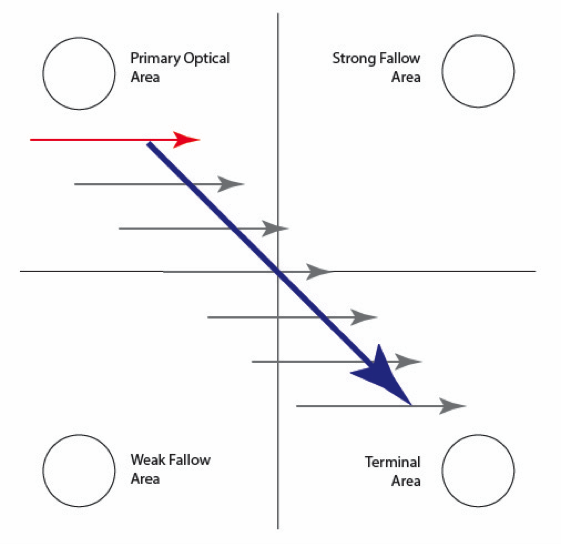
To accomplish this task, it is essential to keep the following scheme in mind:
As you can see, our eye naturally starts reading from the top left and ends at the bottom right, which means these are respectively the ideal places to place headline and call to action.
But too often I have seen these elements placed in the wrong places, screwing up the copywriter’s work.
Just as I have seen too many times the designer fail to use sub headlines because they “didn’t look right,” when these are absolutely critical to giving the reader different doorways into our copy.
A deep understanding of the optical path, visual hierarchy and reading gravity are the essential basis for creating layouts that make reading as natural as possible, discarding out of hand all those creative but unreadable solutions that often appear in the advertising world.
3. Emotional Engagement
Once the readability and optical path are established, it is finally time to use colors and images. Not before as I often see it done.
It is essential to first fix the readability of the text and only then to choose images and colors to make it come alive and emotionally support the copy.
And in this regard, to make sure that the graphic designer you choose can unleash the full power of your copy, it is absolutely essential that he or she knows at least the basics:
Proof elements;
Benefits;
Fears;
These are the three basic elements to highlight with images and colors when working on copy. Images in particular must best represent these elements.
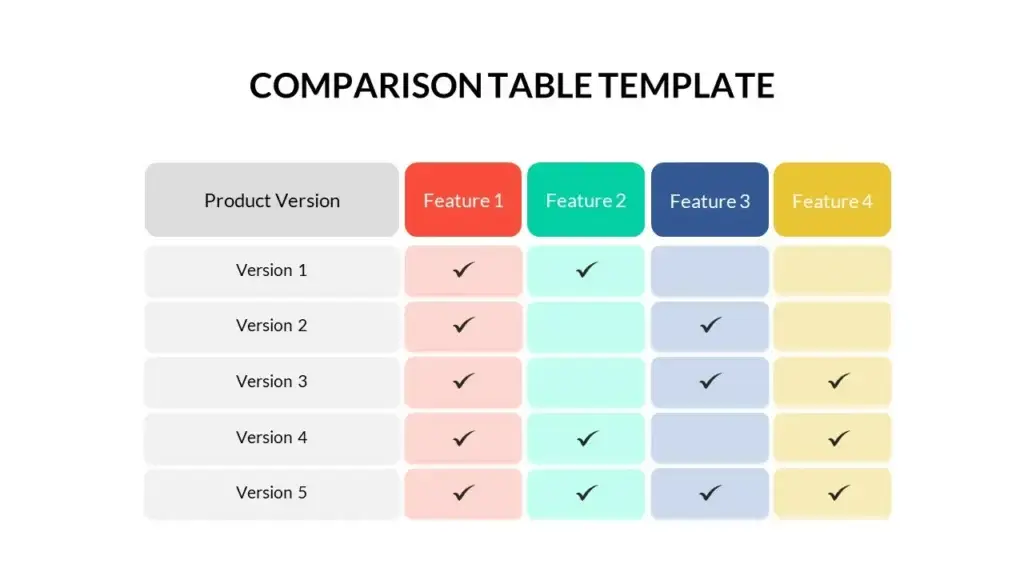
Test elements, for example, can easily become charts, statistics, comparative tables between two or more services.
Benefits are easily shown with images of happy people using the product or service.
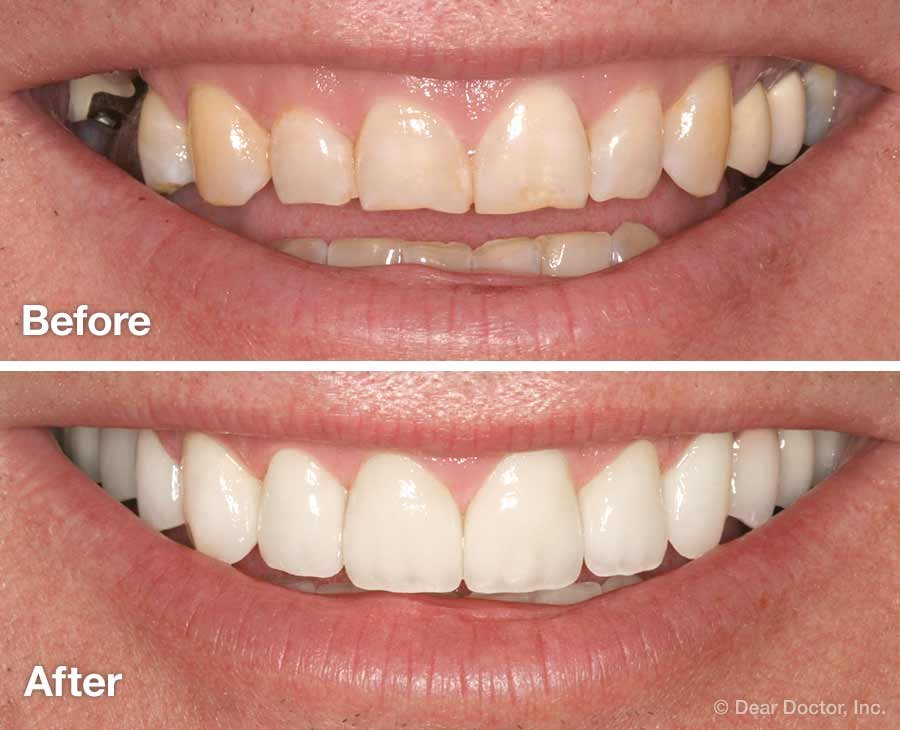
Before/after images also prove extremely valuable for these purposes. They are also increasingly easy to make thanks to AIs that can create images tailored to our needs, bypassing the hours spent among stocks searching for the perfect image.
Fears, on the other hand, should be represented with caution: it is always better to represent the bright smile than the bad tooth. In general, benefits are more desirable and positive situations, in general, turn out to be much more attractive than negative ones.
My recommendation is to always have images of your product or service made by a professional photographer-they are the best long-term investment since they can be reused over and over again in different materials and different campaigns.
Regarding colors, the moment a brand is present, it is essential to follow its guidelines consistently. It is true: it will have a more “advertising” appearance, but a consistent appearance will also be proof of the seriousness of the company, especially when the customer or lead sees us for the second time.
In short, emotional engagement should not be entrusted simply to the beauty of images, but should be done while respecting the copy and its basic arguments. Each graphic element we choose must be an enhancer of the copy and not a substitute for it.
That is why it will be critical to make sure that your graphic designer understands this basic need and demonstrates a willingness to understand at least the basic mechanics of direct copy. The benefits will be evident from the first processing.
Your copy deserves a designer who will make it shine
If you’re a direct copywriter and want to focus only on what you do best-writing and selling-
now is the time to partner with a designer who specializes in Direct Response Design, and who knows the rules of readability, visual pathing, and emotional empowerment of copy.
I have created a partnership tailor-made for A-list copywriters, with clear workflow, respected timelines, and a single goal: to make your campaigns perform better.
In a saturated and hyper-competitive market, true top-tier copywriters do not just create persuasive text: they protect its effectiveness and multiply its results.
How?
Counting on a hidden yet essential partner: Direct Response Design.
In this article, I explain why this has become the true competitive advantage for those who want not just to survive, but to dominate.
Artificial intelligence has changed everything.
It made creating copies a thousand times simpler.
It has made it a thousand times harder to stand out.
Writing has never been so easy.
But every day millions of texts are born to die in the noise.
Today, it’s not enough to be good: you must become impossible to ignore.
The new challenge for Serie A copywriters
It’s no longer about writing better than others.
It’s being read all the way through.
If your message doesn’t arrive intact in the reader’s mind, it’s as if it doesn’t exist.
Too often today, the wrong design kills a winning copy before it can even play its game.
Why Direct Response Design is even more essential today
Direct Response Design is not just an embellishment.
It is an invisible guide that holds the reader’s hand and leads them, never letting them stumble, until your call to action.
Here’s what it really does:
It guides the eye with surgical precision.
It protects your headline and makes it stand out like a beacon in the sea.
It draws the reader line after line, without losing attention.
It amplifies the power of the copy without changing a single comma.
AI cannot replace this
Can write a good draft.
Can format generic templates.
But it still cannot design visual paths intended for the human mind.
Only a direct response designer knows:
Where the eye stops
Where it accelerates
Where it jams
And it knows how to build an invisible path that takes the reader straight to the CTA.
If you don’t direct your reader, you risk losing them.
Every unread word = a missed sale.
Ogni headline ignorata = un’opportunità buttata.
Each poorly presented page = an invisible loss of ROI.
Thinking that “a good text is enough” today is like leaving an important letter in a bottle in the middle of the ocean.
Perhaps it will come. But much more likely it will be ignored.
Your job is not only to write well.
It is to have your text perceived, assimilated, acted upon.
Why choose Keryx Design as your ally
3 years managing the graphics department of the biggest italian direct marketing companu
Operating system broken in over hundreds of campaigns
Absolute respect for your copy
Visual optimization to increase response
Zero decoration. Just results.
We don’t design for vanity.
We design to make your clients read, to make you convert, to make you win.
Those who write well survive.
Those who write well and get read dominate.
If you want to be among the few who really emerge, you can no longer fight this war alone.
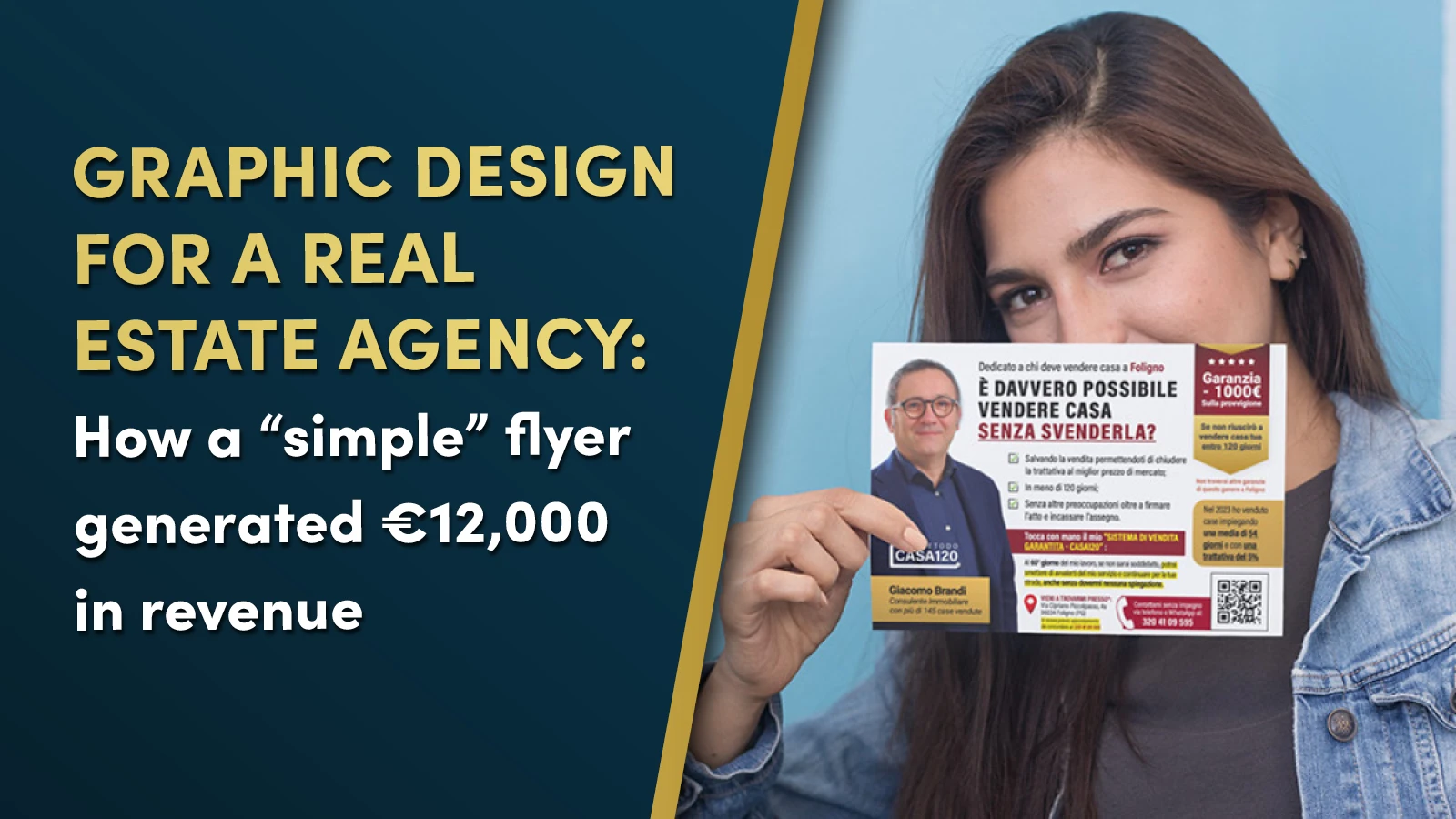
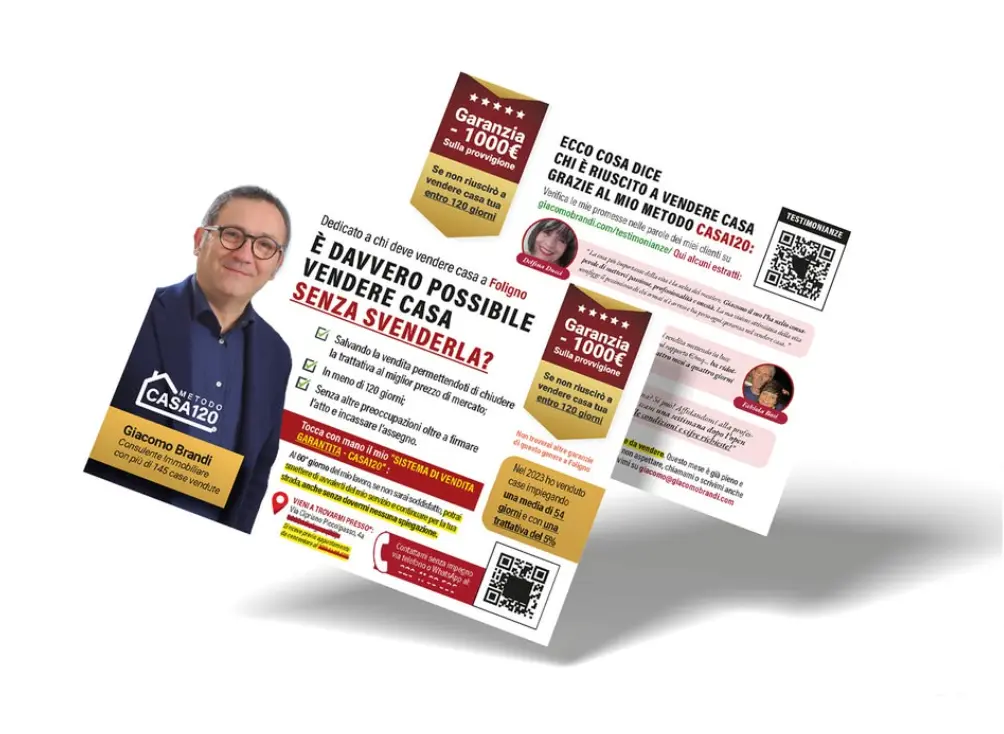
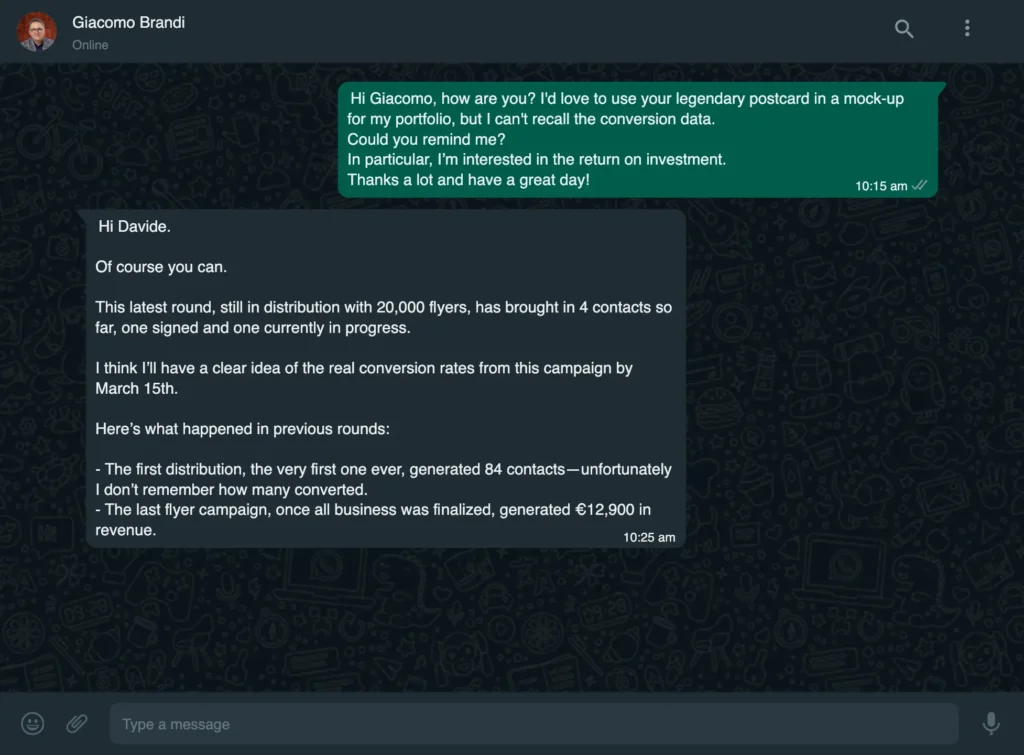
This flyer isn’t winning design awards. But it generated €12,000 in commissions while the “beautiful” version sat in trash cans.
If you write to persuade, you know the frustration: you write a strong sales argument, hand it to a designer, and what comes back looks like it belongs in a museum—but converts like a brick.
This is the story of how we broke that pattern for Giacomo Brandi, a 20-year veteran real estate agent in Italy. Not by making it “prettier.” By engineering it to do one job: get your copy read all the way to the call to action.
The “Beautiful” Competitor That Nobody Called
Before we show you what worked, here’s what didn’t.
This is the kind of flyer most real estate agents use. Clean. Professional. Aesthetically perfect.
And completely useless.
Why it fails everytime:
The giant hero image dominates 70% of the real estate
Your eye hits the photo, recognizes “this is an ad,” and the brain shuts off
The copy is generic and doesnt talk to the reader
There’s nowhere for the eye to go after the initial impression
No visual path guiding the prospect to the CTA
The designer did their job—it looks great. But the copywriter’s message never had a chance.
What We Did Differently: Three Visual Principles That Amplified The Copy
Giacomo’s flyer breaks every “modern design” rule. And that’s exactly why it worked.
1. Visual Gravity Law
Most flyers are flat. Your eye lands somewhere and stops.
In Giacomo’s piece, every element pulls the eye downward through the copy. The headline hooks attention. The layout prevents the eye from sliding off. Each visual element pushes you to the next line. The photo isn’t the destination—it’s part of the journey toward the offer.
For copywriters: Your argument flows uninterrupted from problem to solution to call-to-action.
2. Information Density
Here’s where “creative” designers fail copywriters: they’re terrified of text.
“People don’t read,” they say. “Keep it minimal.”
Bullshit. People read what interests them.
Giacomo’s flyer is text-heavy by modern standards. We gave the copy room to make a complete argument: problem identification, credibility markers, benefit stack, social proof, clear next step.
For copywriters: Your persuasive argument needs space to develop. This layout gave your words the real estate they deserved.
3. Functional Humanity
Yes, Giacomo’s face is on the flyer. But it’s not the star.
The photo appears AFTER the headline hooks interest. It’s sized to build trust, not showcase ego. It functions as a credibility seal while you read the offer.
For copywriters: Your words do the selling. The photo does the trust-building.
The Results
What happened:
4 property owners called
1 signed an exclusive listing contract
1 additional lead in advanced negotiation
€12,000+ in estimated commissions
Not because the flyer was “magical.” Because it guided the eye through the sales argument without resistance.
The copy worked because the design didn’t sabotage it.
Stop Letting Beautiful Design Kill Your Copy
Here’s the truth most copywriters learn the hard way:
You can write the strongest sales letter in the world. But if the layout screams “ad,” breaks the visual flow, or buries your call-to-action under a giant stock photo, your prospect never makes it to the close.
Giacomo didn’t get €12,000 in results because he’s “lucky” or because his market is easy. He got results because we stopped treating his flyer like a brochure and started treating it like a sales tool engineered to convert.
Work With Someone Who Treats Your Words Like They Matter
I don’t do “creative” design for everyone. I work exclusively with copywriters and direct response professionals who measure success in conversions, not compliments.
If you’re tired of watching beautiful layouts generate ugly response rates, it’s time for a different approach.
I’m accepting a limited number of projects this quarter.