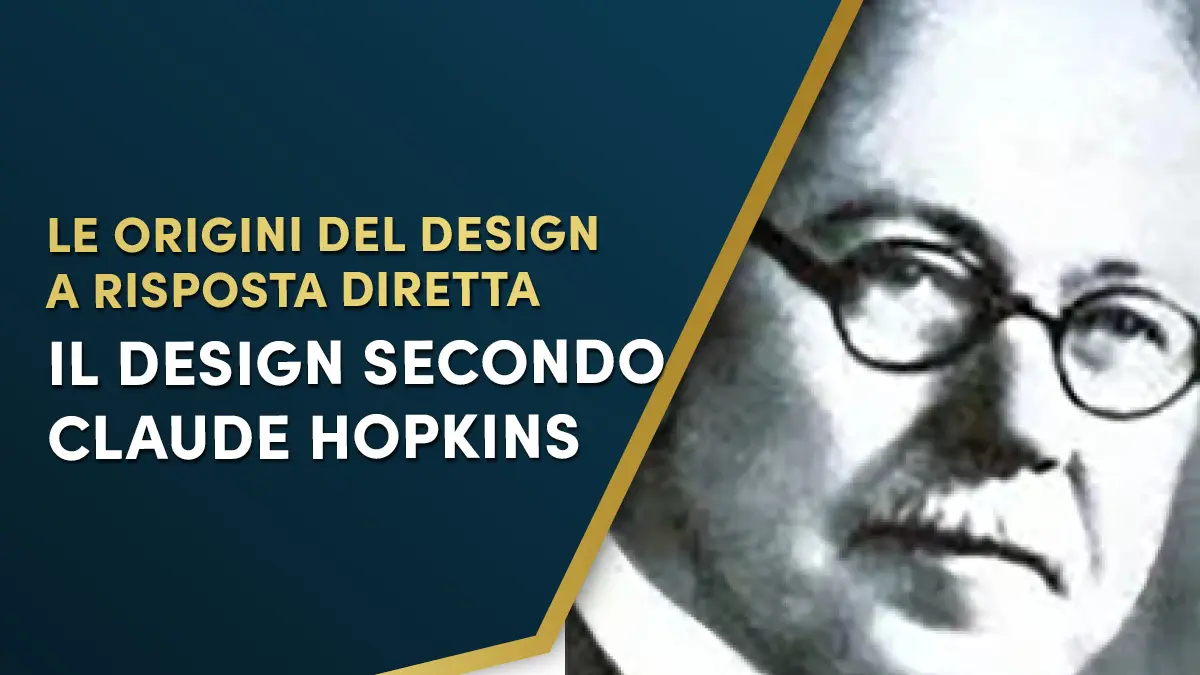
Claude Hopkins, along with legendary figures like Albert Lasker and John E. Kennedy, played a foundational role in the evolution of direct marketing.
He is famous for introducing innovative concepts that we still use today, such as:
- Free trial offers to lower the barrier to entry.
- Money-back guarantees to eliminate risk.
- The importance of market testing to stop guessing and start knowing.
He was a fervent advocate of traceable coupons, which allowed him to measure the exact effectiveness of his advertising campaigns and constantly refine them based on real data.
The “Pre-emptive Strategy”
Hopkins is also recognized for devising the pre-emptive strategy. This consisted of telling consumers about a product’s production process and its distinctive features before his competitors did.
Even if the process was standard for the industry, being the first to claim it created a unique ownership of quality in the consumer’s mind. This approach famously helped Schlitz Beer climb from fifth to first position in its market.
Another principle he held dear was the adaptation of advertising language—both in text and graphic appearance—to perfectly match the target audience.
Graphics According to Claude Hopkins
Despite living between the 19th and 20th centuries, Hopkins’ views on advertising graphics were incredibly avant-garde.
He observed that even then, much of advertising aimed to capture attention through “appealing” and “engaging” images, requiring a massive investment of time and money. This is exactly like the modern tendency of companies to waste fortunes on creative and original advertisements that have absolutely nothing to do with selling the product.
The “Elegant Salesman” Trap
For Hopkins, this approach was flawed. He compared an overly elaborate image to an overly elegant salesman: someone so polished and “fancy” that they potentially intimidate or alienate customers who don’t identify with that image.
According to Hopkins: The only way to identify the perfect image for an advertisement is through meticulous and scientific market research.
To find the right visual, you must know your audience’s habits:
- What are their favorite readings?
- What programs do they watch?
- What is the design of the products they already use?
By adapting this information to your product and highlighting its benefits and solutions, the most suitable image for an ad will emerge naturally.
Claude Hopkins and Direct Response Design
Although Claude Hopkins lived more than 100 years ago, he faced the exact same problems you face today when choosing a graphic designer for your direct response marketing materials.
The Problem with Modern Graphic Design
The truth is hard to swallow: modern graphic design academies DO NOT train young designers in direct marketing. They DO NOT talk about sales.
The result? There is a total lack of professional training in Direct Response Design.
Currently in Italy, there are only a handful of graphic designers specialized in this field—and most have already been “snatched up” by large direct marketing corporations.
Why This Matters to You
I personally managed the graphics department of the largest Italian direct marketing training company for 3 years. I’ve seen firsthand how the wrong design can kill a campaign.
You are facing a significant challenge: formatting your direct marketing materials the wrong way doesn’t just look “bad”—it actively lowers your conversions.